Regular cleaning services give a business a defined routine for its shared spaces, instead of leaving each cleaning task to whoever notices it first. For a Kalamazoo office or commercial facility, the useful starting point is a room list, a service calendar and a clear contact process. Those documents show what is included and help staff distinguish routine work from immediate reporting, supply purchases and separately approved projects. The arrangement should fit how your building operates, not just its total floor area.
This guide explains eight practical reasons to organize regular cleaning services and the questions to settle before the first visit. It does not promise a particular financial return or guarantee compliance with every site requirement. A written scope helps the building team and provider agree on responsibilities, check delivery and review changes. Use the ideas below alongside your own maintenance arrangements and any specialist procedures that apply to the facility.
8 practical reasons to plan regular cleaning services
1. Make recurring tasks visible
A shared kitchen, reception area or restroom can need attention even when the rest of the building appears tidy. Regular cleaning services let you list the tasks expected at each visit rather than rely on a broad instruction to clean everything. Include the rooms, accessible surfaces and normal service window. Give your site contact the same version used by the provider. If a task is excluded or completed only periodically, make that clear before the work begins.
2. Match frequencies to actual use
Different rooms have different workloads. A meeting room used throughout the day may need a different routine from a private office occupied once a week. Regular cleaning services can assign frequencies by area rather than treating every room identically. Record staff numbers, visitor patterns and shift changes during the walkthrough. Review the result after normal operating days. If an area repeatedly needs attention before the next visit, discuss its schedule and the interim responsibilities of on-site staff.
3. Clarify employee-area responsibilities
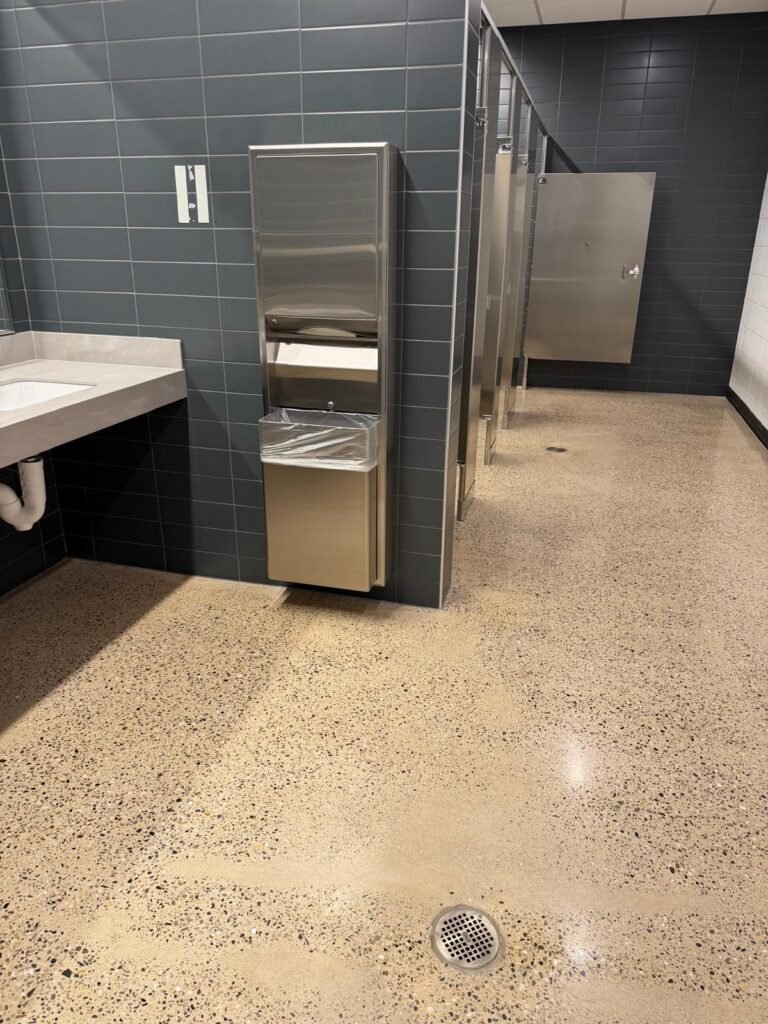
Restrooms and breakrooms need agreed tasks as well as supply arrangements. Regular cleaning services should identify who cleans the fixtures and floors, who purchases soap and paper products and who replenishes available stock. Explain where supplies are stored and who receives a low-stock report. Our restroom cleaning checklist provides questions for these shared facilities. Keep the cleaning work distinct from fixture repairs or persistent drainage concerns that require a maintenance response.
4. Coordinate access and service windows
An agreed arrival time is useful only when the rooms can actually be accessed. Tell the provider about locked offices, late meetings, alarms, keys and escort requirements. Regular cleaning services should include a process for reporting missed access and agreeing on the next step. Confirm a backup contact for the service window. If an inaccessible room appears on the exception record every week, change the access arrangements instead of allowing an unresolved scheduling problem to continue indefinitely.
5. Connect routine care with periodic work
Routine vacuuming and mopping do not automatically include carpet extraction or floor-finish restoration. Regular cleaning services work best when periodic tasks have their own assessment, approval and calendar. Review commercial carpet cleaning and floor care separately from the recurring scope. Confirm the actual flooring and its maintenance instructions before choosing a treatment. Keeping those projects visible makes the budget easier to review and avoids assuming every monthly proposal includes identical work.
6. Give concerns a clear reporting route
Name the person who receives missed-task reports, supply concerns and requests for additional work. Agree on realistic acknowledgment and follow-up arrangements. With regular cleaning services, the site contact can refer to a specific room and task rather than making a general complaint about the whole facility. Keep unresolved issues visible at the service review. If photographs are used, avoid confidential documents, personal information and other material that should not be included in a routine cleaning report.
7. Make the price easier to compare
A monthly price alone does not show how many visits, rooms or tasks are included. Compare regular cleaning services using the same room list, service days and supply assumptions. Separate any initial project from the recurring price and identify who can approve extra work. Our commercial cleaning cost guide explains common scope and budget factors. Ask questions about blank or unclear items before accepting a proposal, rather than assuming they will be covered later.
8. Create a basis for future changes
Your building may add a department, change opening hours or move staff to hybrid work. Regular cleaning services need a documented change process so the schedule stays connected to the actual workload. Review the affected rooms and agree on revised tasks, frequencies and any price difference before the new arrangement begins. Share the updated scope with the people checking and performing the work. Keeping one current version is easier than relying on a series of informal requests.
Build a service calendar your team can use
Begin with a simple room list. For each area, record the task, planned frequency, access window and responsible party. Keep tasks completed during the operating day separate from the provider’s scheduled visits. A member of staff may need to report a new spill or an empty dispenser between visits even when regular cleaning services are in place. Discuss that boundary explicitly so nobody assumes an evening visit covers issues that develop hours after the cleaning team leaves.
Add periodic work as separate entries with an assessment or review date. Some tasks are scheduled by agreement; others depend on the observed condition of the surface. Record when the work is completed and any restrictions afterward. If multiple locations are involved, use a consistent format with a separate room list for each property. Standard records can help compare delivery, but each building still needs its own access instructions and surface-care requirements.
Prepare for the first month of regular cleaning services
Before the first visit, confirm the start date, building contact and access handover. Tell employees which surfaces they should clear and which personal items the team will leave untouched. Check that the agreed supplies are available. If the building needs a separately scoped initial clean, identify that work and its price before recurring visits begin. Avoid assuming that the first maintenance visit can absorb every accumulated task without a change to the agreed arrangement.
Set an early review after the provider has experienced ordinary operating days. Check whether rooms are available as expected, supplies can be found and the service calendar reflects actual use. Bring specific observations from the site team. If a concern repeats, discuss whether it relates to access, task frequency, supplies or execution. Keep the agreed next step and follow-up owner in the record so the same issue does not remain unresolved from one review to the next.
Questions about regular cleaning services
Does every business need daily visits?
No single schedule suits every property. Set frequencies around occupancy, traffic, shared facilities and the tasks required. A quieter office may have fewer routine visits while still needing internal checks during use. A multi-shift facility may need a different arrangement. Ask the provider to explain the proposed calendar and review its results. If you need daytime support between recurring visits, discuss day porter services as a separate scope with defined hours.
Are cleaning and disinfection the same task?
They are different processes. Specify which surfaces are cleaned and which require disinfection under the agreed plan. The product must suit the intended use and be applied according to its label, including any preparation and contact time. The EPA explanation of cleaning, sanitizing and disinfecting provides useful context. Do not treat a quick wipe or a generic service description as evidence that a separately required procedure has been completed.
Can a contract cover the office and warehouse together?
Yes, when both are assessed and explicitly included. Give operational floors, offices, restrooms and employee areas their own tasks and frequencies. Identify specialist work, restricted areas and exclusions. Review our office cleaning and warehouse cleaning pages when preparing the room list. A broad contract heading should not obscure which team is responsible for a particular space or whether production equipment and elevated work are outside the scope.
What should we ask about products?
Tell the provider about approved-product requirements, surface instructions and procurement preferences before the quote is finalized. Ask for specific product information instead of relying on broad terms such as green, safe or chemical-free. Clarify which supplies are included in the price and which are purchased by your team. Keep product and stock responsibilities with the written scope so a change in purchasing staff does not leave the cleaning team without the materials agreed for the service.
Arrange regular cleaning services for your Michigan facility
Champion Facility Solutions is a woman-owned Michigan business established in 2019. To discuss regular cleaning services, bring your room list, operating hours and priorities to a complimentary facility walkthrough. Call or review our Kalamazoo commercial cleaning page for local information. Coverage, crew availability and the final scope are confirmed for each property before service is scheduled.